Key Takeaways
-
Yes, you can learn SEO on your own — but only if you’re willing to play the long game.
-
Most people fail at SEO not because it doesn’t work, but because they quit before it has time to compound.
-
SEO rewards consistency, real expertise, and helping people — not hacks or shortcuts.
-
DIY SEO works best for businesses with time and runway, not those needing instant results.
-
Knowing SEO isn’t enough; having a simple, repeatable system is what actually drives rankings.
Short answer: yes.
Long answer: yes — but only if you understand what you’re actually signing up for.
I’ve been doing SEO for well over a decade. I run an SEO agency. I teach SEO. I’ve helped businesses go from barely surviving to getting thousands of visitors a month from Google.
And I learned SEO on my own.
Here’s the honest, unfiltered breakdown.
How I Actually Learned SEO (Not the Polished Version)
I went to school for Advertising & Marketing Communications, and SEO was part of the program. We had a few classes on it — maybe one per year — and they covered the fundamentals.
Things like:
- How heading tags work
- The idea that every page on your website is a “doorway” into your business
It was a solid introduction and gave me a baseline understanding of how search engines think. But it barely scratched the surface.
Useful? Sure.
Enough to actually rank a website and drive real business results? Not even close.
In reality, I probably learned about 1% of SEO in school.
The other 99% came after — when I landed my first real client: a bin rental company in Lakeshore, Ontario.
Once there was an actual business depending on results, everything changed.
I wasn’t learning SEO in theory anymore. I had to:
- Build the website from the ground up
- Optimize pages with a real goal in mind
- Pay attention to what worked and what didn’t
- Test ideas in the real world, not in a textbook
That’s when SEO finally clicked.
This is the part most people don’t want to hear — especially in a world where everyone expects instant results.
I see this every time I run Rank Week — a live, step-by-step SEO workshop where thousands of business owners get SEO done together and start seeing real momentum almost immediately.
It took about a year.
Not weeks.
Not months.
A full year of consistent work.
And during that time, it didn’t feel magical or exciting. It was slow. Incremental. A lot of testing, tweaking, and wondering if the effort was actually paying off.
But then it did.
That bin rental company went from renting 11 bins to over 100, with SEO becoming their primary driver of new business. Phone calls increased. Inquiries became more consistent. They weren’t relying on word of mouth or ads anymore — people were actively finding them on Google.
That’s when I saw, firsthand, how powerful organic traffic can be for a small business when it’s done properly and given time to compound.
That was the moment it really clicked for me:
SEO isn’t hype.
It’s leverage.
What Learning SEO on My Own Actually Looked Like
Early on, learning SEO was rough.
I was piecing things together from wherever I could find them — mostly YouTube videos and blog posts from sites like Neil Patel, Search Engine Journal, and Social Media Examiner. A lot of it was trial and error, with no real framework to follow.
I wasn’t even using keyword research tools at the beginning. I was literally guessing what I thought people were searching for. Sometimes it worked. Most of the time, it didn’t.
The real turning point came when I started using keyword research tools properly and, more importantly, when I began understanding search intent — not just individual keywords, but why someone was searching in the first place.
The hardest part, though, wasn’t the learning curve. It was the lack of community.
There was a lot of gatekeeping.
A lot of “you should already know this.”
Very little actual help.
That frustration is exactly why I started teaching SEO publicly and eventually built a community around it — to create the kind of support system I wish existed when I was just starting out.
The Moment Solo Learning Got Faster (Not Easier)
I still learn SEO on my own — but not in isolation.
For a long time, everything was trial and error. I’d test something, wait weeks or months to see if it worked, and then adjust. That’s just the nature of SEO. But the biggest acceleration didn’t come from learning more tactics — it came from learning alongside the right people.
Things changed when I started connecting with other SEOs who actually had real results. Not theorists. Not people repeating what they’d read online — people who were actively ranking websites and testing strategies in the real world.
We’d share:
- What was working right now
- What had stopped working
- Real case studies and results
- Tests we were running and the outcomes
It reminded me a lot of the early MrBeast YouTube days — a small group of people openly sharing insights, cutting through the noise, and learning faster together.
That kind of collaboration didn’t make SEO easier, but it made the learning process much faster. It probably cut years off my learning curve and helped me avoid a lot of dead ends I would’ve otherwise gone down on my own.
The Biggest Misconception About “Learning SEO Yourself”
The biggest misconception I see is that people think SEO is something you can pick up quickly and casually.
They assume they can watch a few videos, follow a checklist they found online, and start seeing results within a few weeks. When that doesn’t happen, the conclusion is almost always the same: SEO doesn’t work.
In reality, nothing could be further from the truth.
SEO is a marathon, not a sprint. Even for people who understand SEO well, it often takes six to twelve months to see meaningful, consistent results — especially for brand-new websites or businesses without existing authority.
That’s because Google isn’t just looking at what you publish. It’s evaluating:
- Whether it can trust your website
- Whether you actually know what you’re talking about
- Whether you show up consistently over time
Google is cautious by design. It doesn’t reward new sites or new content immediately, and it shouldn’t. Trust has to be earned.
If you go into SEO expecting fast wins, it will feel frustrating and broken. But if you go into it understanding the timeline and playing the long game, everything changes.
SEO isn’t broken.
It’s just patient.
And patience is exactly what makes it such a powerful advantage for businesses willing to stick with it.
Who Should Learn SEO on Their Own
Learning SEO on your own makes the most sense when time is more available than money.
DIY SEO is a great fit if you’re a startup or early-stage business, especially when paying for ads or hiring an agency just isn’t realistic yet. SEO is one of the few growth channels that doesn’t require a big upfront budget — it rewards consistency and effort more than spend.
It’s particularly effective if:
- You have little or no marketing budget
- You’re still building momentum in your business
- You can invest even 1–10 hours per week
- You have runway and don’t need results next month
The barrier to entry is low. There are free tools, inexpensive tools, and more than enough resources to get started without spending a dollar. What SEO really asks for is patience and follow-through.
And if you want to understand the fundamentals before diving in, I also put together a free course called Understanding SEO that breaks down how SEO actually works in plain English.
If you have time but not cash, SEO is one of the smartest long-term bets you can make for your business.
Who Shouldn’t Learn SEO on Their Own
SEO isn’t for everyone — and that’s important to say out loud.
It’s not a good fit for get-rich-quick schemes, disposable dropshipping sites, affiliate spam projects, or anything built with the expectation of fast wins. SEO simply doesn’t work that way.
It’s also a poor choice for businesses that are on the brink and need revenue immediately. If your business will shut down in the next 30–60 days without new sales, SEO is the wrong channel to rely on. It takes time to compound, and it won’t save a struggling business overnight.
In those situations, short-term strategies make far more sense:
- Paid ads
- Partnerships
- Direct sales outreach
SEO is designed for real businesses building something real — businesses that want long-term visibility, credibility, and consistent inbound demand. If that’s your goal, SEO is worth the investment.
Real Examples: Success vs Failure
I’ve seen both sides of this play out many times, and the difference almost never comes down to intelligence or talent. It comes down to execution and consistency.
A Real SEO Success Story
One of my favorite examples is a doctor in Dubai named Ahmed.
He didn’t hire an agency.
He didn’t have some massive marketing budget.
He didn’t try to game the system.
He simply followed the SEO strategies I shared publicly — step by step — and actually implemented them.
He focused on answering real questions his patients were searching for, optimized his website properly, and stayed consistent even when results didn’t show up right away. No shortcuts. No hacks. Just steady execution.
Within six to twelve months, the results were undeniable:
- He ranked #1 for multiple competitive local search terms in Dubai
- His website was generating around 8,000 visitors per month
- His practice saw a significant increase in patient inquiries and bookings
That kind of traffic for a local medical practice is massive. And it didn’t come from ads or gimmicks — it came from showing up consistently and letting SEO compound over time.
Where Most People Go Wrong
On the flip side, I’ve watched countless business owners “try” SEO — and fail.
The pattern is almost always the same.
They publish one or two blog posts.
They wait a few weeks.
Nothing dramatic happens.
They decide SEO doesn’t work and stop.
Not because SEO failed — but because they never gave it a real chance.
SEO rewards consistency, not dabbling.
If you publish one blog post per week for a year, that’s 52 opportunities for someone to find your business. Each post is another door into your website, another chance to build trust with Google, and another way to showcase your expertise.
Most people never give themselves that chance. They quit right before SEO starts doing what it’s designed to do.
And that’s the real difference between success and failure with SEO — not luck, not talent, but patience and follow-through.
Knowing SEO vs Having an SEO System
This is where a lot of people get stuck.
You can understand every SEO concept — keywords, headings, internal links, backlinks, technical SEO — and still fail to get results. Not because you’re missing information, but because knowledge alone doesn’t produce rankings.
SEO isn’t about what you know.
It’s about whether you consistently show up and apply it.
That’s where a system comes in.
A real SEO system isn’t complicated, but it is intentional. It means:
- Publishing content consistently, even when traffic is low at first
- Sharing real experience from your business or industry
- Injecting opinions, case studies, and firsthand insights into your content
- Focusing on helping real people, not trying to trick Google
This is also where a lot of people go wrong with AI.
If you’re just pumping out AI-written content with no human insight, no expertise, and no real perspective, you’re not doing SEO — you’re creating noise. Google doesn’t reward content created for the sake of volume.
It rewards value.
And value comes from systems that prioritize consistency, clarity, and real-world experience over shortcuts.
So… Can You Learn SEO on Your Own in 2026?
Yes. Absolutely.
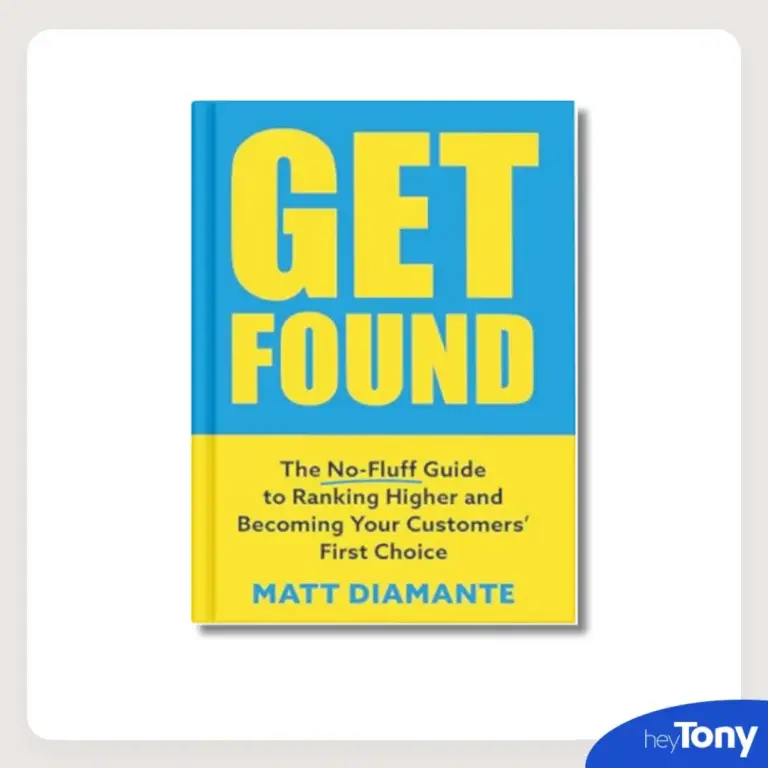
If you want a complete, beginner-friendly roadmap, my book Get Found walks you through everything you need to know about SEO — without jargon, fluff, or guesswork. And guess what, it’s already a best selling SEO book on Amazon!
More people than ever are successfully learning SEO on their own — not because SEO has gotten easier, but because the path has become clearer.
I recently ran a live SEO event with thousands of attendees. Many of the people there had never done SEO before. They weren’t experts. They didn’t know the terminology. They simply followed the steps, implemented what they learned, and focused on getting one thing done at a time.
Some of them were ranking #1 on Google within days — not because SEO is easy, but because clarity plus action will always beat confusion.
If you want to learn SEO, the path is surprisingly simple:
- Learn the basics so you understand how everything fits together
- Commit to consistency, even when progress feels slow
- Be patient and respect the timeline SEO requires
- Focus on helping real people with real questions
That’s it.
No hacks.
No shortcuts.
Just momentum — and the willingness to stick with it long enough for SEO to work the way it’s supposed to.
Originally published . Last updated .
Categories:


Explore More