I’ve been teaching SEO online for years and doing it for clients for over 15 years.
Through Instagram, TikTok, YouTube, blog posts, live training — you name it. And if there’s one thing I’ve learned, it’s this:
Most people don’t struggle with SEO because it’s hard.
They struggle because it’s explained poorly.
SEO is usually taught like a secret system.
Full of jargon.
Full of acronyms.
Full of “trust me, just do this” advice.
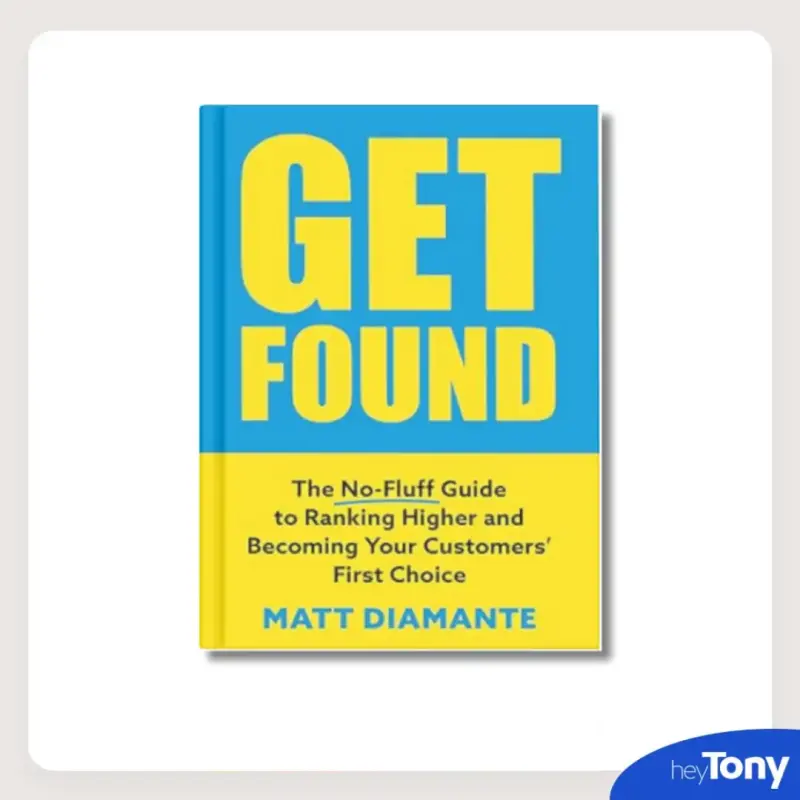
And that’s exactly why I wrote Get Found.
This book isn’t a collection of hacks.
It’s not a checklist of trends that’ll be outdated in six months.
And it’s definitely not written for SEO professionals talking to other SEO professionals.
It’s written for business owners, marketers, and doers who want to actually understand how SEO works — and then apply it.
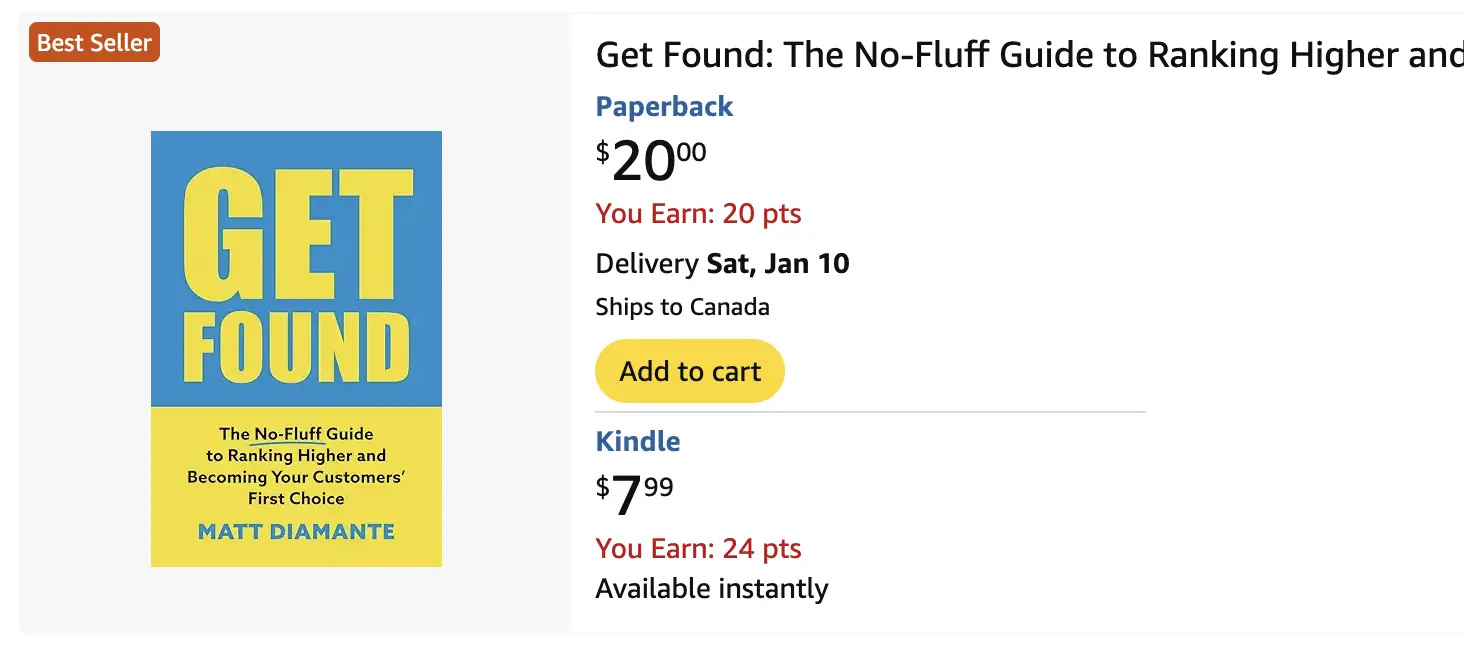
It also ended up becoming a #1 best seller on Amazon in the Search Engine Optimization category, which honestly still feels a little surreal.
But before we get into that, I want to explain why this book exists at all.
Why I Finally Wrote This Book
This book actually started as something else.
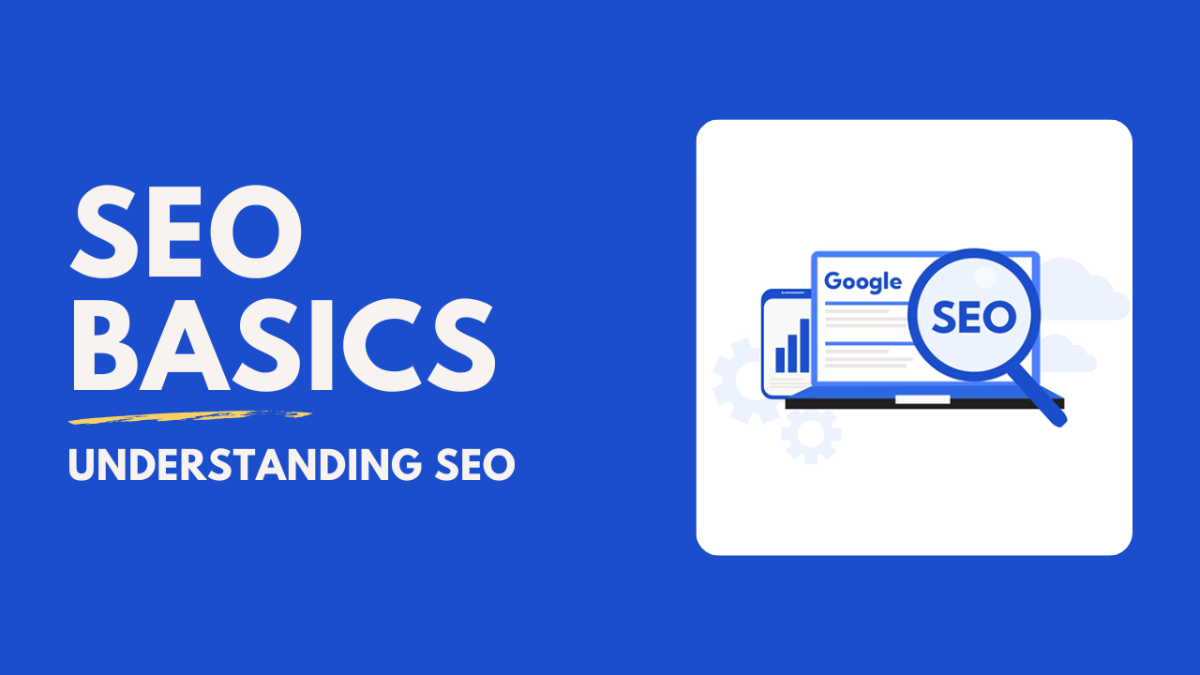
Years ago, I created a free course called Understanding SEO. It was designed to explain SEO in plain English — no fluff, no gatekeeping, no assuming people already “know the basics.”
More than 30,000 people have gone through that course.
And the most common feedback I kept getting was:
“This is the first time SEO actually makes sense.”
Then came the next question:
“What’s next?”
People didn’t want more tactics.
They wanted more context.
More strategy.
More why, not just what or how.
At the same time, I noticed something else.
Almost nobody was writing long-form, durable content about SEO anymore. Everything was short-form. Fast. Trend-driven. Disposable.
SEO changes quickly — but the core principles don’t.
Helping people. Answering real questions. Creating content that earns trust. Making your website the obvious choice.
Those things worked 10 years ago.
They work today.
And they’ll still work years from now.
So I decided to write a book that focused on those fundamentals — not the noise.
A book that could:
- Live alongside the Understanding SEO course
- Give people a deeper understanding of the strategy
- Act as a long-term reference, not a one-time read
And honestly?
It was also a way to provide a huge amount of value at a very low cost — something that anyone could access without buying a course or hiring an agency.
It was also a line in the sand.
I wanted to show that I’m not just someone posting SEO tips on social media.
I wanted to put my thinking, experience, and philosophy into something tangible.
Something that lasts.
What Get Found is Actually About
At its core, Get Found is about stripping SEO down to what actually matters.
Not what sounds impressive.
Not what looks good in a proposal.
Not what’s trending on TikTok this month.
Most business owners think SEO is this big, technical, mysterious thing — something only developers or agencies can understand.
It’s not.
Yes, there are technical elements. Yes, keyword research matters. Yes, formatting matters.
But none of that works if you miss the point.
SEO, at its simplest, is about one thing:
Helping the right people find the answers they’re already looking for.
That’s it.
This book focuses on:
- How people search
- Why they search
- What makes content genuinely useful
- And how Google rewards clarity, depth, and helpfulness over time
I intentionally avoided writing a step-by-step “do this, then this” manual. Not because steps aren’t useful — but because SEO doesn’t work that way in the real world.
What works is understanding:
- How to think about keywords
- How to structure pages that make sense to humans
- How to create content that earns trust instead of chasing clicks
- How all of this compounds over months and years
If you understand the why, you’ll always be able to figure out the how — even as tools and platforms change.
That’s the difference between memorizing tactics and building a skill.
This book is meant to help you build the skill.
What “No Fluff” Really Means
When I say no fluff, I’m not just talking about writing style.
I’m talking about the entire SEO industry’s habit of overcomplicating something that doesn’t need to be complicated.
Right now, SEO advice is full of:
- New acronyms every six months
- Trendy frameworks with fancy names
- Overengineered systems that sound smart but don’t move the needle
AEO.
GEO.
AIO.
Content pillars.
Topical authority maps.
Verticals.
Clusters.
Some of this stuff isn’t wrong — it’s just unnecessary for most people. And it keeps you busy planning instead of doing.
The problem is that all this extra noise makes SEO feel inaccessible. It turns something practical into something intimidating. And when people feel overwhelmed, they don’t implement anything at all.
That’s the real cost of fluff.
So in this book, I made a very intentional choice:
If you don’t need to know it to get results, it didn’t make it in.
No padding.
No filler chapters.
No “look how smart I am” explanations.
Everything in Get Found ties back to one question:
“Does this help someone solve a real problem?”
If the answer is no, it doesn’t belong in your SEO strategy.
This isn’t about gaming algorithms.
It’s about creating content that would still be valuable even if Google didn’t exist.
Because when you do that consistently, Google usually rewards it anyway.
Who This Book Is For (And Who It Isn’t)

This book is not for everyone — and that’s intentional.
Get Found is written for people who are willing to do the work.
If you’re a business owner, marketer, or someone working inside a company who wants to understand SEO — not just outsource it and hope for the best — this book is for you.
It’s for:
- People who want clarity, not shortcuts
- People who are willing to implement, test, and iterate
- People who understand that SEO is a long game
What it’s not for:
If you’re looking for a magic trick…
If you want instant rankings without effort…
If you want to read something once and never touch your website again…
This isn’t the book.
Reading Get Found won’t magically grow your traffic.
Implementation will.
That’s why I say this book works best for doers.
People who read a chapter and then open their website.
People who tweak, improve, publish, and repeat.
People who understand that progress comes from consistency, not motivation.
If that sounds like you, this book will make SEO finally feel doable.
What Happens If You Actually Implement This
Reading this book will help you understand SEO.
Doing what’s in the book is what changes your business.
That distinction matters.
I’ve seen it over and over again — people consume endless content about SEO, but nothing changes because nothing gets implemented. Understanding without action doesn’t compound.
Implementation does.
In the book, I share examples pulled directly from my own experience and the content I’ve put out over the years — including one that still stands out.
A doctor in Dubai watched my free SEO videos.
That’s it.
No agency.
No course purchase.
No ad spend.
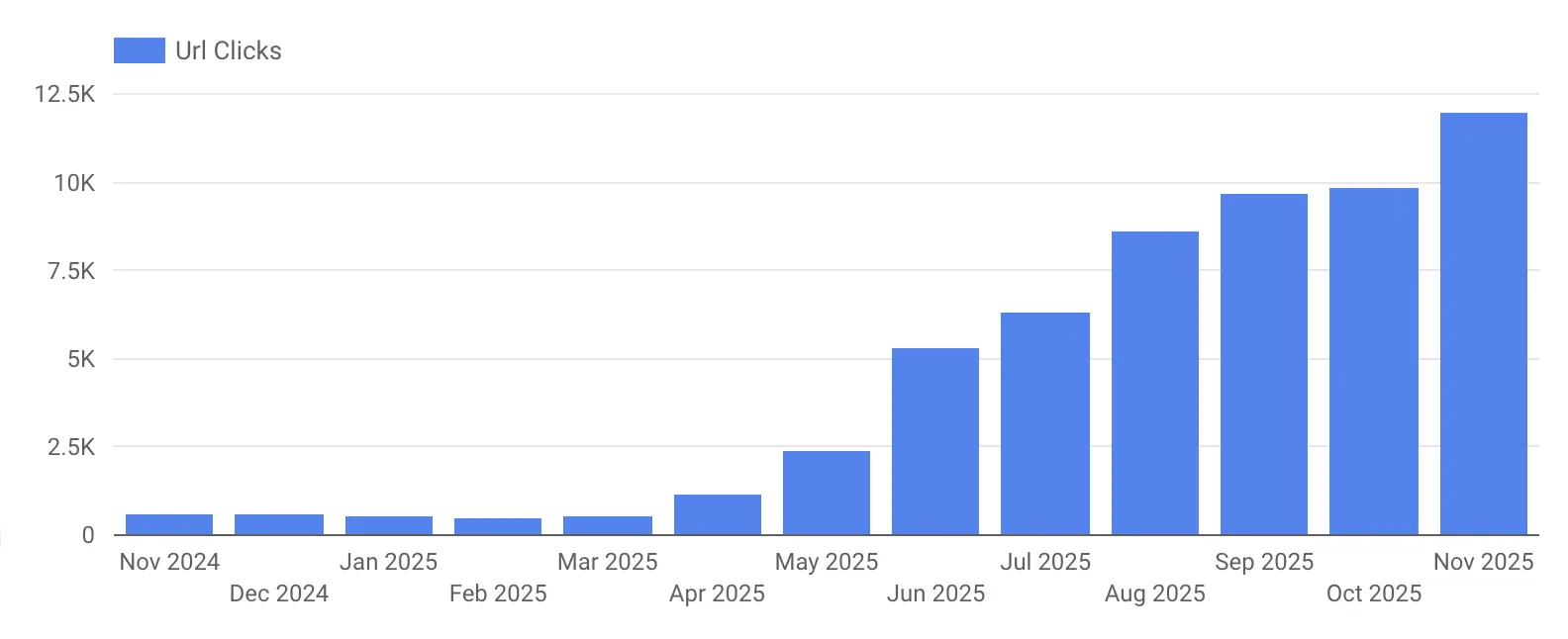
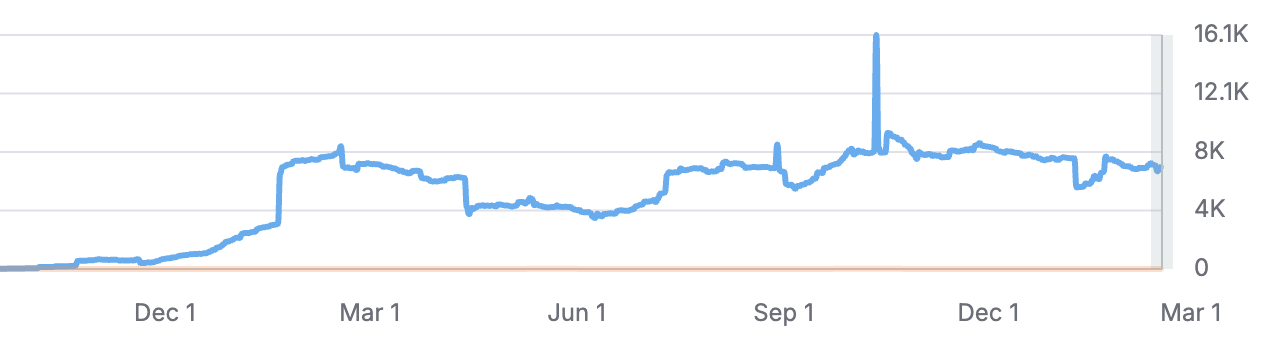
By applying what he learned, he grew his website to around 8,000 visitors per month — completely organically.
That story isn’t in the book to impress you. It’s there to prove a point:
SEO rewards effort, not insider access.
If you read this book and:
- Apply the ideas consistently
- Create content that actually helps people
- Improve your site a little at a time
Six to twelve months from now, you won’t just have more traffic — you’ll have confidence.
Confidence that you understand what’s working. Confidence that you’re not guessing anymore. Confidence that your website is becoming an asset instead of a liability.
That’s the real payoff.
The SEO Mistakes I Made So You Don’t Have To
I’ve been doing SEO for almost 15 years.
And for a good chunk of that time, I was doing things the hard way.
Early on, I believed what a lot of people still believe:
- That SEO was mostly technical
- That small tweaks were enough
- That ranking was about “optimizing” instead of creating
I spent way too much time making micro-edits.
Adding a sentence here.Tweaking a keyword there. Updating a page without actually improving it.
Sometimes it worked, but most of the time, it didn’t.
What finally clicked was this:
Google doesn’t reward effort — it rewards usefulness.
Real improvement came when I stopped trying to polish thin pages and started building genuinely helpful ones.
I also learned how much gatekeeping exists in SEO.
For years, it felt like everyone had a “secret process” they refused to share. Agencies hid behind vague explanations. Gurus sold mystery instead of clarity.
The reality is less exciting — and way more empowering.
There are core principles that don’t change:
- Answer real questions
- Create depth, not surface-level content
- Structure pages so they make sense to humans first
- Earn trust over time
I’ve seen the impact of this shift firsthand.
We’ve worked with clients who were burned by agencies before us — including a florist who came to us while still paying another SEO company.
They were stuck at a few hundred visitors per month.
Within months of focusing on real content, better product pages, and clear structure, their traffic grew — and so did their orders.
That’s not a one-off story.
It’s a pattern.
And it’s exactly why this book focuses on fundamentals instead of tricks.
Becoming Your Customers’ First Choice (Not Just Ranking #1)
Ranking is nice.
But rankings alone don’t build businesses.
The real goal of SEO isn’t to “beat competitors.”
It’s to earn trust before someone ever talks to you.
That’s what I mean by becoming your customers’ first choice.
When you consistently help people, without immediately trying to sell them, something interesting happens. You stop feeling like a random option and start feeling like the obvious one.
Imagine this at a local level.
Someone Googles a problem they’re dealing with.
They land on your site. You explain the issue clearly. You show the pros and cons. You’re honest — even when it doesn’t directly benefit you.
You just helped them for free.
That’s powerful.
This idea isn’t new. Marcus Sheridan built an entire business by answering customer questions openly and transparently — including questions that scared most businesses to address.
SEO works the same way.
It’s not about promoting yourself.
It’s about showing up when people need clarity.
Every helpful page is a small deposit into trust.
And trust compounds.
By the time someone is ready to buy, they don’t feel like they’re taking a risk — they feel like they already know you.
That’s what turns traffic into customers.
Hitting #1 on Amazon (And Why That Matters)
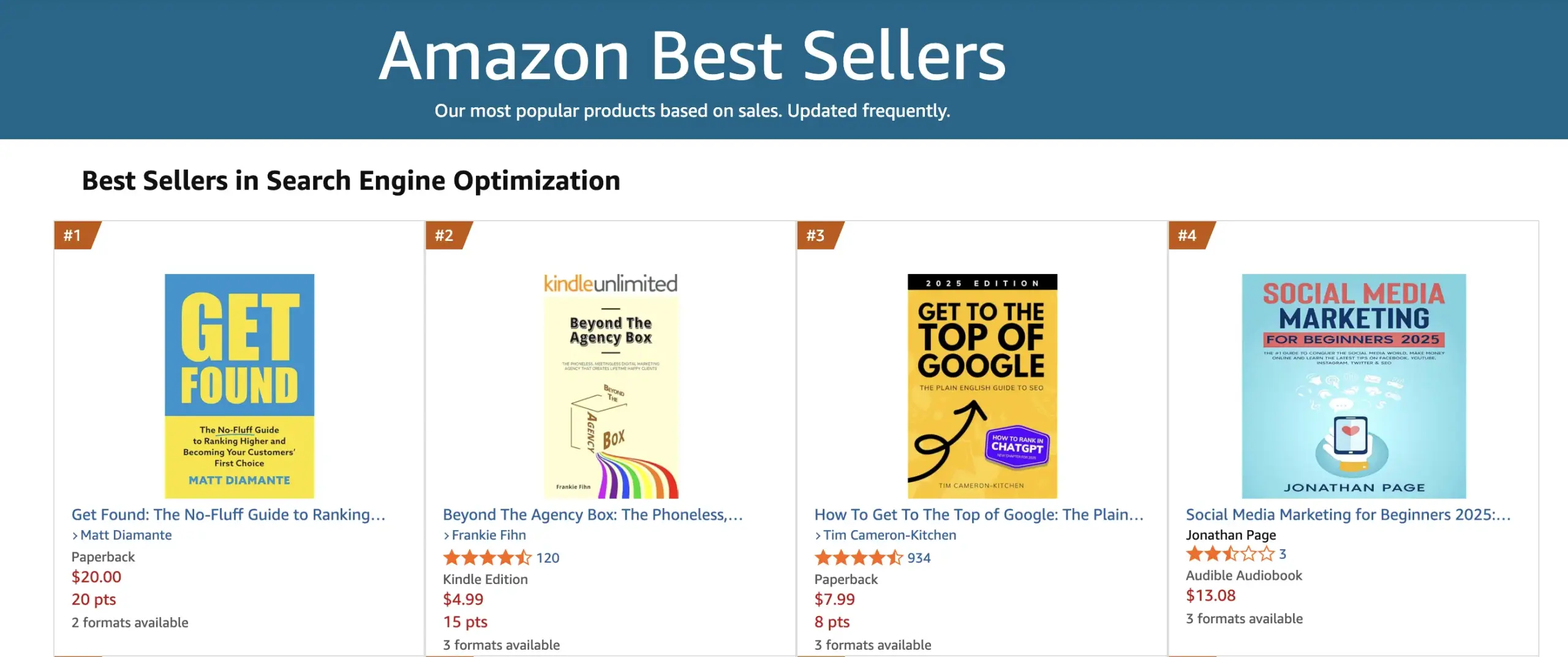
When Get Found hit #1 SEO book on Amazon, my first reaction was honestly a mix of excitement and laughter.
Part of me was surprised.
And part of me wasn’t surprised at all.
I’ve read a lot of SEO books over the years. I did a lot of research while writing this one. And most of what’s out there falls into one of two categories:
- Way too technical
- Way too shallow
I wanted this book to sit in the middle — approachable, practical, and actually enjoyable to read.
So yes, I believe this is the best SEO book that exists. And I know that sounds bold — every author probably feels that way about their own work — but this book is the result of:
- 15 years of hands-on experience
- Hundreds of clients across different industries
- Thousands of real conversations with business owners
- And years of teaching SEO publicly, not behind a paywall
The other reason it didn’t surprise me?
The audience was already there.
For years, I’ve been posting SEO and digital marketing content on social media in a way that makes people say:
“Oh… I finally get it.”
SEO doesn’t have to be boring.
It doesn’t have to feel like a textbook.
And it definitely doesn’t have to feel inaccessible.
This book was just the long-form version of the conversations I’ve been having every day online.
How Publishing This Book Led to a Google Knowledge Panel
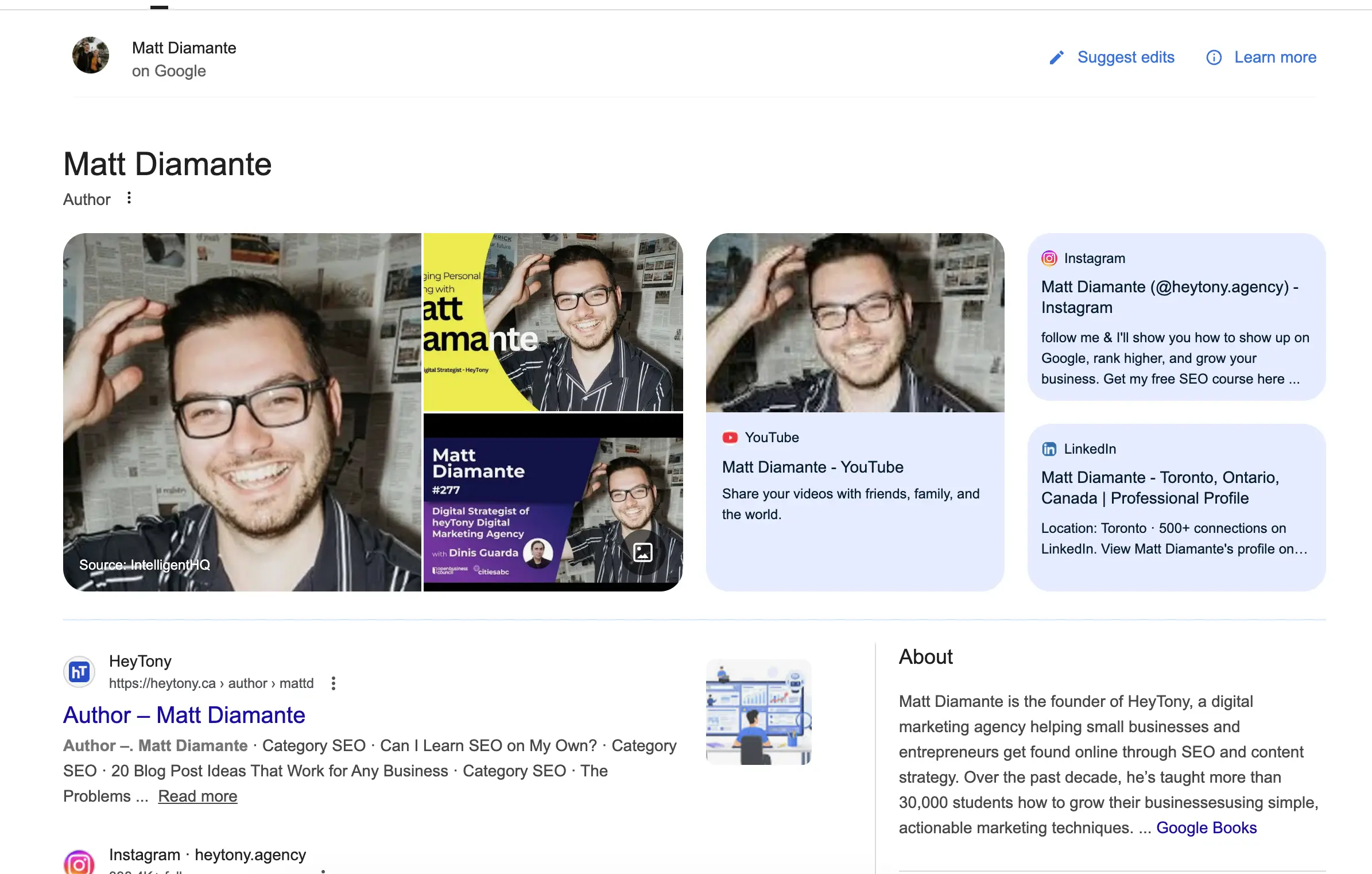
One unexpected side effect of publishing Get Found was seeing a Google Knowledge Panel show up for my name.
If you’ve ever searched for a well-known person or brand and seen that information box on the right-hand side of Google or on top of the search results, that’s a Knowledge Panel.
I didn’t apply for it ahead of time.
I didn’t pay for it.
It just… appeared.
When you publish a book properly, it gets distributed through official channels:
- Google Books
- Amazon
- Author profiles
- Structured data tied to your name
All of that creates clear, consistent signals about who you are and what you’re known for.
Eventually, Google connects the dots.
Once the Knowledge Panel appeared, I was able to claim it and verify that it was actually me — but the important part is why it showed up in the first place.
Authority isn’t something you declare.
It’s something that’s recognized.
Publishing a book is one of the strongest credibility signals you can send — not because it’s flashy, but because it’s substantive.
And for business owners, that’s the real lesson.
When you consistently create meaningful, long-form content that demonstrates expertise, trust follows, whether that’s through rankings, brand recognition, or something like a Knowledge Panel.
The One Thing I Want You to Remember
You can read every SEO book.
Watch every YouTube video.
Follow every creator on Instagram, TikTok, or wherever else.
You’ll learn a lot.
But none of it matters unless you actually do the work.
SEO doesn’t reward curiosity — it rewards consistency.
That’s why I think of this book as a guide, not a guarantee.
If you want a metaphor, this book is Yoda.
It can show you the path.
It can help you understand the principles.
It can give you clarity.
But you still have to be the one who takes the journey.
If you read Get Found, apply what’s inside, and stay consistent, SEO stops feeling mysterious. It becomes something you own — not something you’re guessing at or outsourcing blindly.
That’s the real goal.
Where to Get the Book (Get Found)
If you want to stop guessing and actually understand how SEO works, Get Found is available now.
It’s written for business owners and marketers who want clarity — not hype — and who are willing to put the work in.
You can grab the book here:
Get Found: The No-Fluff Guide to Ranking Higher and Becoming Your Customers’ First Choice
And if you want to go deeper alongside the book, you can pair it with my Understanding SEO course, which walks through the foundations in a simple, visual way:
Originally published . Last updated .
Categories:

Explore More