
I recently sat down with Edward Sturm and Jake Tlapek for a two-hour conversation on The Edward Show podcast. Between the three of us, we’ve spent a combined 30+ years doing SEO, built agencies, grown social media followings into the hundreds of thousands, and tested just about every strategy you can think of.
You can watch the full episode here:
Tip 1: Use Press Releases for SEO — Even If Nothing Newsworthy Is Happening
This was one of the biggest takeaways from our conversation: press releases are wildly underused for SEO, and they don’t cost much. You can get one distributed for as little as $30 to $50 if you buy in bulk from a service like EIN Presswire, or around $80 to $100 for a single release.
What makes this powerful is how fast it works. During the episode, I shared how a single $80 press release helped my book show up in Google’s AI Overviews — the AI-generated summary boxes at the top of search results. That press release was eventually taken down by the publication that ran it, and it still influences the AI Overview today.
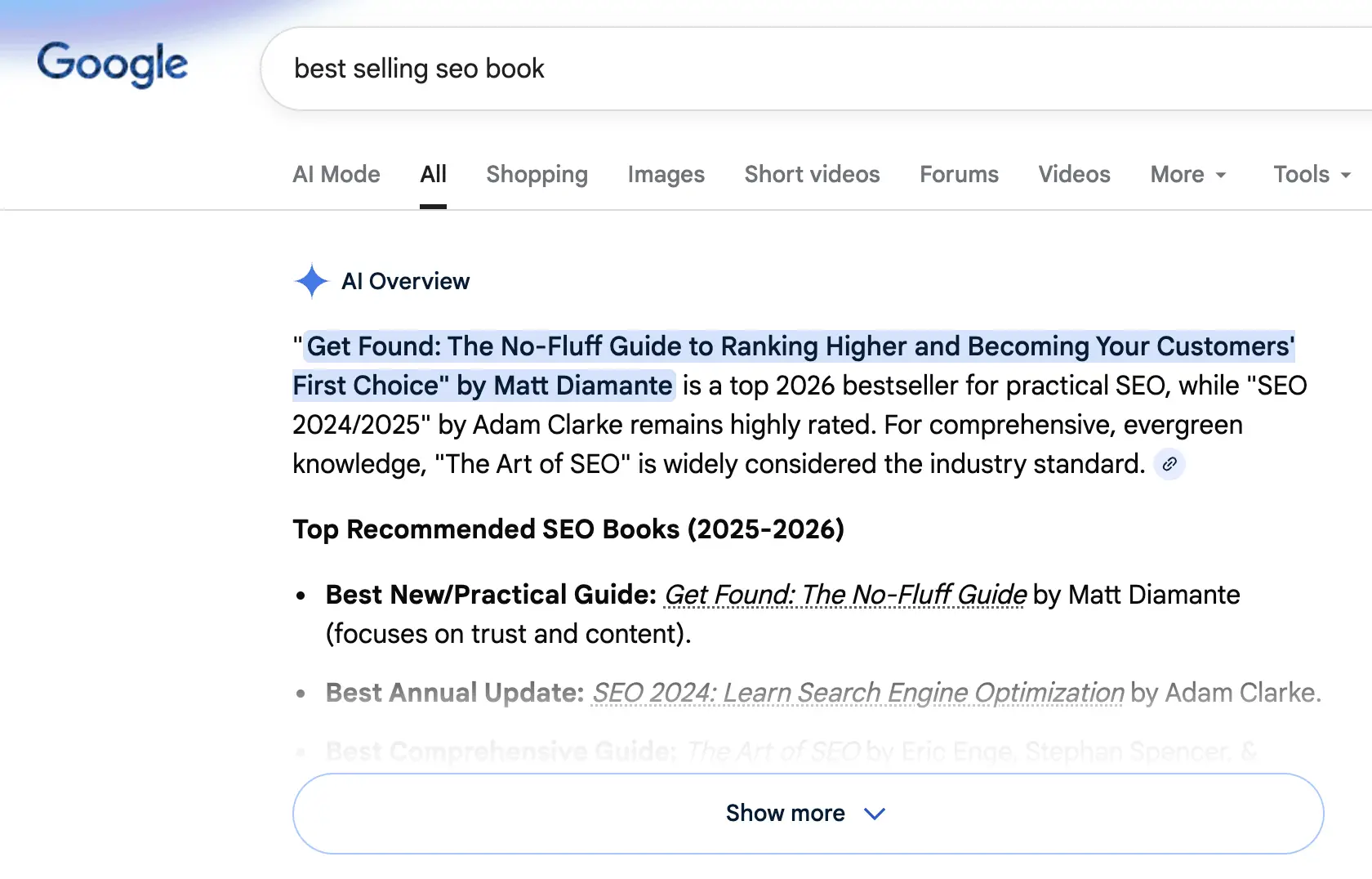
The actionable takeaway: You don’t need a dramatic announcement. Got a new client? A recent win? A case study worth sharing? Frame it as a press release and distribute it. It creates backlinks, gives Google fresh context about your business, and can even influence how AI tools like ChatGPT and Google’s AI Overviews talk about you.
Tip 2: Open Your Videos With Searchable Phrases, Not Just Hooks
Most content advice tells you to lead with a punchy hook. That’s not bad advice, but Jake shared a different approach that changed how he thinks about video entirely.
He noticed that some of his old videos — ones that performed poorly when they first went up — were quietly racking up thousands of views months or years later. When he dug into it, he found that those videos contained phrases people were actively searching for on TikTok and Instagram. The platforms were surfacing his old content through search.
“I’m not playing for the views this week. I’m playing for lifetime views on my videos through search.”
— Jake Tlapek
The actionable takeaway: When you record a video, try opening with a phrase someone might actually type into a search bar. Instead of “You won’t believe what Google just did,” try “How to rank on Google in 2025.” You may get fewer views on day one, but you’ll build a library of content that keeps working for months and years.
Tip 3: Turn Your Best Organic Content Into Ads
Jake shared a dead-simple strategy his agency uses to generate around 50 leads per week: post two videos a day for 30 days. Then take the top three performers and run them as paid ads.
The logic is sound — your organic content has already been tested by a real audience. The videos that got the most views and engagement are proven to resonate. Why wouldn’t you put ad spend behind them?
The actionable takeaway: You don’t need to produce separate ad creative from scratch. Your best-performing organic posts are your ad creative. Test organically first, then amplify the winners with even a small budget. Jake’s agency grew by $350,000 in monthly recurring revenue in eight months using this approach.
Tip 4: Bundle SEO With Paid Ads to Keep Clients Longer
One of the most practical agency insights from the conversation came from Jake, who shared that his agency has nearly stopped selling SEO as a standalone service. Instead, they bundle it with paid advertising from day one.
The reason is simple: SEO takes time. Sometimes months. Even when the work is solid, clients get anxious during that waiting period. Ads generate results immediately, which keeps clients happy while SEO compounds in the background. Jake said their retention rate for clients who do both from the start is around 96%.
The actionable takeaway: If you sell SEO services, consider pairing them with a paid channel that can deliver short-term wins. It’s not about replacing SEO with ads — it’s about using ads to cover the gap while organic results build. Your clients stay longer, and the two channels actually make each other more effective.
Tip 5: Track Hooks, Topics, and Benefits in a Spreadsheet
Edward shared a method he’s been using for the last couple of months that he says has noticeably improved his video performance. He keeps a spreadsheet where he studies videos from other creators in his niche that have performed well. For each video, he writes down three things: the hook, the subject matter, and the specific benefits named in the video.
The insight here is that people watch and share content that clearly tells them what they’ll gain. Most creators focus on being clever with their hooks but forget to communicate why someone should keep watching.
The actionable takeaway: Go to the profiles of top creators in your space. Sort by most popular. For each top video, write down the hook, the topic, and the benefit they promise to the viewer. After doing this for 20 to 30 videos, you’ll start to see patterns — and you’ll naturally get better at writing hooks and identifying ideas that resonate.
Tip 6: Google Is Crawling Your Social Videos — Treat Them Like Web Pages
This one surprised even us. During the conversation, I shared an experiment from my agency where we published a blog post targeting “does color affect SEO,” ranked it number one on Google, and then recorded a casual video about it. The video ranked number two on Google — directly underneath the blog post — even though the keyword wasn’t in the video title or description.
What was wild is that Google generated its own meta description for the video based on what was said in the conversation. Google is actively transcribing social video content and using that text to determine what the video is about and where to rank it.
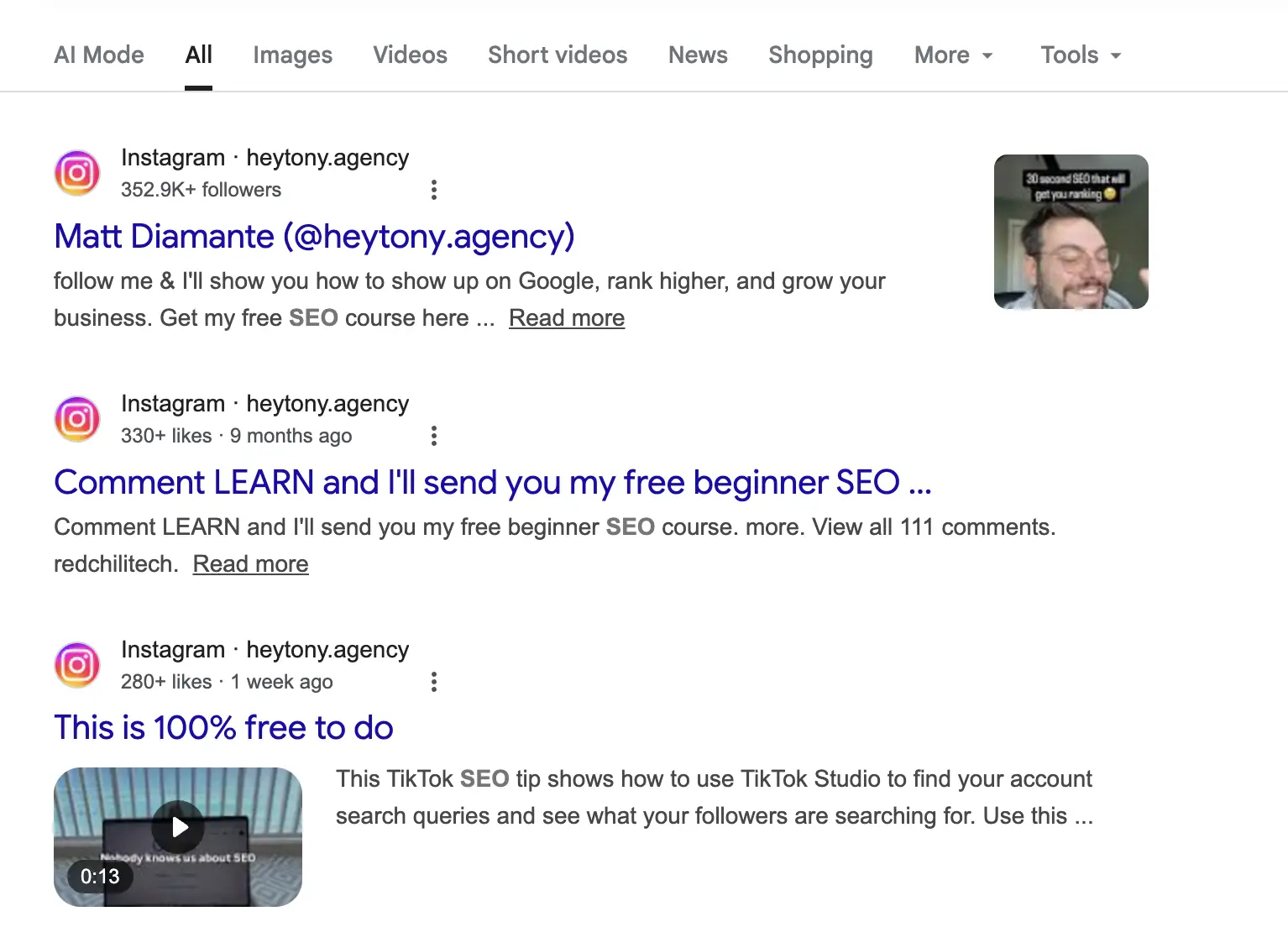
The actionable takeaway: What you say in your videos matters for SEO, not just engagement. If you mention a keyword clearly and naturally in your spoken content, Google can pick it up and rank your video for it. This means your TikToks, Instagram Reels, and YouTube Shorts are functioning more like web pages than most people realize.
Tip 7: Use AI to Speed Up Keyword Research — But Don’t Skip the Thinking
We spent a good chunk of the episode talking about how AI tools are changing SEO workflows. I shared how I’ve been exploring AI agent systems that can handle keyword research, competitive analysis, content writing, editing, and internal linking in sequence — passing work from one step to the next automatically.
But here’s the caveat we all agreed on: AI can speed things up dramatically, but it can’t replace the judgment that comes from actually looking at search results yourself. Edward gave a great example — his team found a keyword with 1,300 monthly searches and a difficulty score of one, which looked like a goldmine on paper. But when they actually looked at the results, it was clearly an artificial keyword that real searchers weren’t meaningfully using.
“You need to use your brain and ask — is this a real keyword? Are real people actually searching this with intent to buy or learn something?”
— From our conversation on The Edward Show
The actionable takeaway: Use AI to do the heavy lifting — pull keyword lists, analyze competitors, draft content. But always review the output yourself. Look at the actual search results page. Ask whether the keyword makes sense for real people. The best SEO work is still a combination of speed (AI) and judgment (you).
The Bigger Picture
If there’s one thread that ties all of this together, it’s that SEO is no longer just about blog posts and backlinks. It’s about social content ranking in Google, press releases shaping AI Overviews, and video transcripts functioning as on-page text. The lines between “SEO” and “content marketing” and “social media” are dissolving fast.
The SEO influencers and practitioners who are winning right now are the ones who are willing to test across channels, share what they learn publicly, and move quickly when something works. That’s exactly what we try to do — and this conversation was a reminder of how much you can learn when people who are doing the work sit down and compare notes.
If you want to hear the full two-hour conversation, you can find Episode 945 of The Edward Show on YouTube, Spotify, and Apple Podcasts.
Want to learn more about SEO?
Check out my SEO book Get Found, available on Amazon — a practical guide to ranking on Google and driving organic traffic to your business.
Originally published . Last updated .
Categories:

Explore More