Dana’s Pet Daycare SEO Success Story: 295K-1.3 Million Impressions in Six Months
(Client name changed for privacy. Performance data is unmodified.)
They had ten years in the business, a great facility, and a blog covering exactly the right topics. Yet, they had almost nothing to show for it on Google.
This SEO client case study shows exactly what changed once HeyTony took over. The results include 1.3 million impressions, a 126% increase in clicks, and a solid page-one average position on Google.
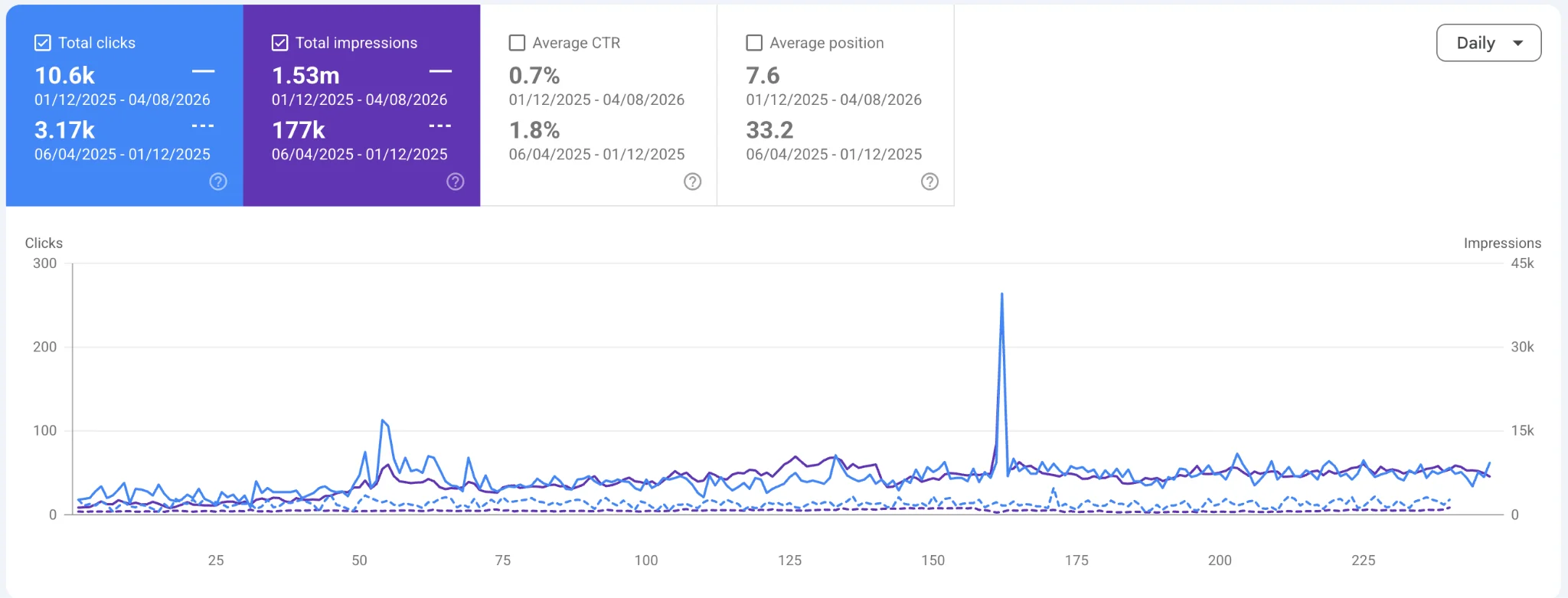
The content itself was not the issue. There simply wasn’t enough of it, and what did exist wasn’t built to be found. This is the hardest type of SEO problem to spot because it feels like you are doing everything right. However, covering the right topics is where SEO starts, not where it ends.
What We Found

We audit before we write. Every search engine optimization campaign starts with identifying what’s holding a site back, not just filling out a content calendar. Here is what we uncovered.
Not Enough Depth
The topics were great for their audience, but they barely scratched the surface. Nothing went deep enough to actually compete in search results or give readers the real help they needed. As a result, just a few pages were carrying the weight of the entire website.
Outdated Optimization Tactics
The older blog posts were trying way too hard to rank. Instead of good SEO, it was classic keyword stuffing. One post repeated its target phrase 70 times, bolded it everywhere, and asked the same question four times. That trick stopped working years ago. Today, it just frustrates your readers and makes Google ignore the page entirely.
Competing Against Themselves
Two different pages were fighting over the same valuable keyword. This splits your ranking power for the one phrase you actually want to own. When you do this, Google chooses which page to rank, and it is rarely the one you want.
A Weak Location Page
The location page was essentially just a quick rewrite of the service pages. It had about 250 words of repeated content already live elsewhere on the site, giving Google no reason to rank it. You see thin location pages all the time in local SEO, and they rarely ever work.
Unindexed Pages
Many of the site’s pages were not even indexed in Google Search Console. If Google does not index a page, it will never show up in search results. Finding and fixing this isn’t the most glamorous part of the job, but it is usually one of the fastest ways to see real improvement.
What We Did

We kept the subjects and rebuilt everything around them.
Writing for the Reader, Not the Business
The best posts on this site don’t try to sell anything. We answered the real questions owners search for late at night about breed suitability, development stages, and everyday health worries. We answered them properly, without a sales pitch attached. When you cover enough ground in one subject area, Google starts treating your site as an authority. Several of those posts now sit in the top five search results, bringing in people who had never even heard of the business before.
Giving Older Pages a Real Focus
We rebuilt the older pages so each one targeted just a single keyword. Every existing page got a specific phrase to own, an angle based on how the pet daycare business actually operates instead of generic fluff, and a new structure that matches how people actually search today.
Cleaning Up Dead Content
We ran a full audit of the site to see what was still getting attention and what had quietly died off. If a page was worth saving, we refreshed and republished it. If it repeated another page on the site, we either merged it or cut it completely.
Fixing the Keyword Overlap
We untangled the competing pages so that only one page targets the primary commercial search intent, rather than having two pages split the ranking power. By consolidating the information, we sent a clear signal to search engines about which page was the primary authority. This simple fix prevents keyword cannibalization and allows the chosen page to rank much higher.
Rebuilding the Location Page
We completely rebuilt the thin location page. Instead of repeating text from other service pages, we built it around the exact terms local searchers type into Google. We added specific details about the neighborhood, local landmarks, and the service area to ground the business in its community. This gives search engines the geographic context they need to confidently rank the site in local map packs.
Getting Pages Indexed
We fixed the indexing issues in the backend. Pages Google had completely ignored were finally indexed, so they could show up in search results. You can write the best content in the world, but it will not matter at all if search engines do not know it exists. Clearing these technical roadblocks opened the door for immediate organic traffic growth.
Formatting for Quick Answers
We structured every new piece of content to be highly quotable. We put direct, clear answers at the top of the page and used clear, question-shaped headings to guide the reader. This layout matches how people scan articles for fast information. It also positions the text to be pulled into AI overviews and featured snippets at the very top of the search results.
The First Three Months Looked Like Nothing
For the first few months, nothing happened. Content went out on schedule, the technical fixes were in, and the graph stayed flat.
This is where most SEO engagements die, and it’s the part most agencies leave out of their case studies. We told this client up front that month three was the realistic turnaround because trust is what Google takes time to grant, and there’s no way around it.
Month three is when things turned around. It’s held through four Google algorithm updates since, which often makes the difference between fixing a site properly and finding a shortcut.
The Results
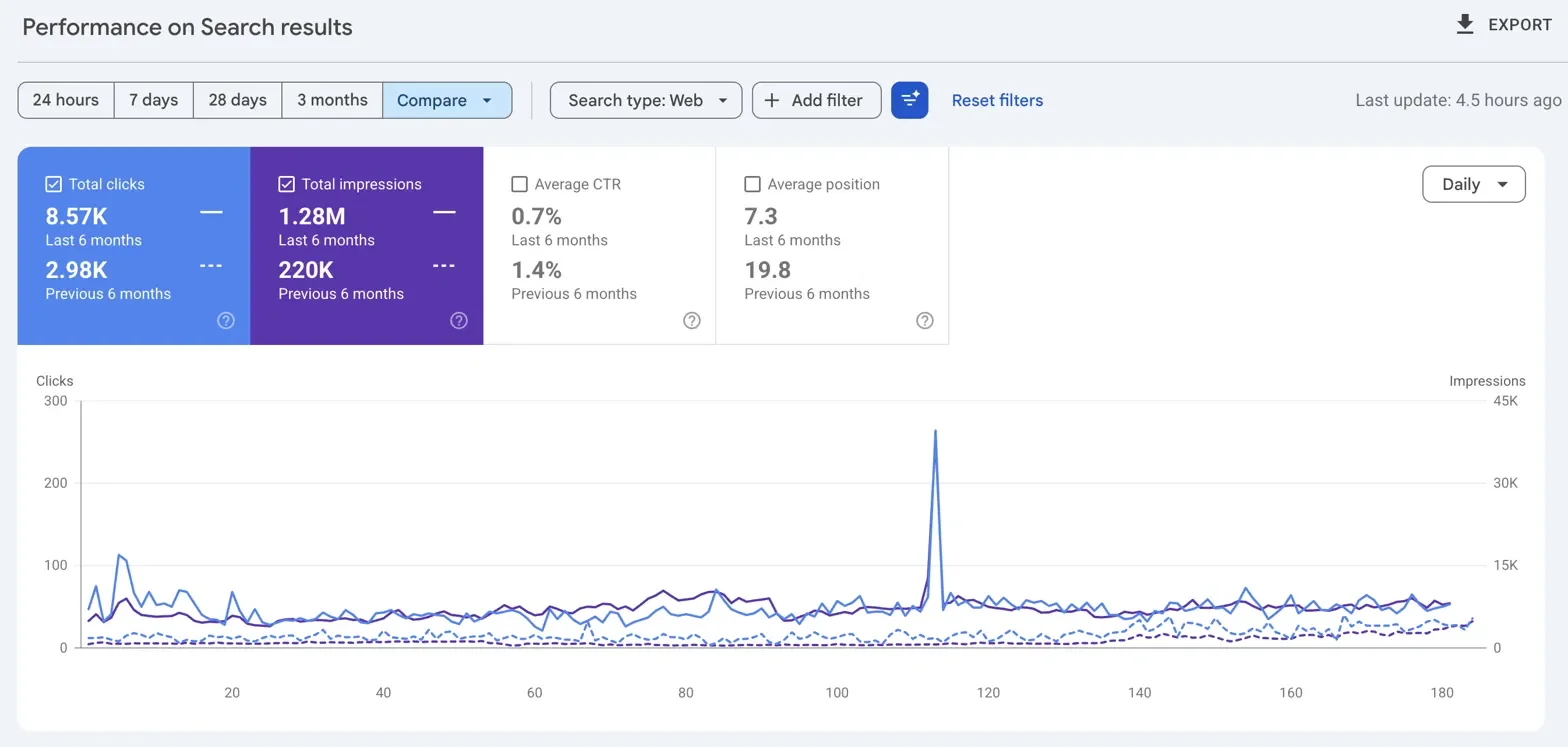
This Google Search Console graph compares our six-month campaign against the previous six months. The blue line tracks actual visitors, while the purple line shows search visibility. You can see exactly when the strategy took off: impressions increased from 295,000 to 1.3 million, and website clicks nearly tripled.
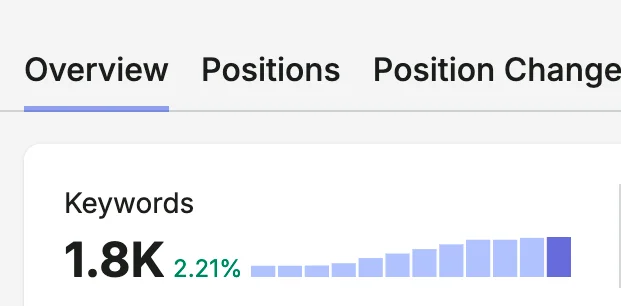
The chart below tracks organic keyword growth over a full year. It shows the site moving from a handful of search terms to ranking for 1,800 distinct keywords. The growing yellow and dark blue blocks show the site capturing page-one positions for the exact searches that drive local bookings.
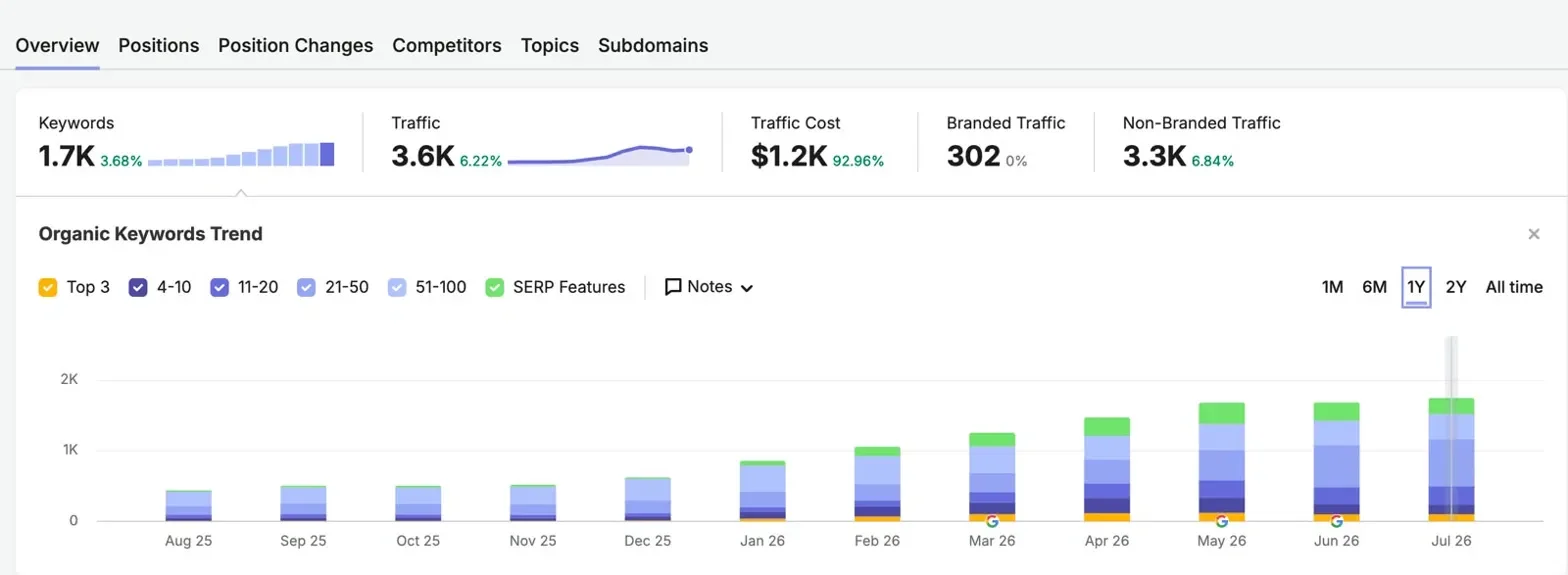
Here’s an overarching summary of their results from the last six months versus the previous six.
- Impressions: Grew from 295K to 1.3M (up 344%)
- Organic Clicks: Jumped from 3,700 to 8,350 (up 126%)
- Average Position: Moved from 15.2 to 7.4 (page two to page one)
- Ranking Keywords: Climbed from a few hundred to 1.8K
- Traffic Spread: 147 pages are now earning impressions instead of just a handful.
What That Traffic Is Worth
Organic clicks have a real market value. One of the best ways to understand that value is to look at what you would have to pay Google Ads for the exact same visitors.
Before we started, the site was averaging about 617 organic clicks a month. By the end of the six months, that number jumped to 1,392. When you factor in the average cost per click for these specific search terms, the ad spend equivalent of that traffic grew from about $121 a month to $273. Unlike paid ads, this built-in value repeats every month as long as those rankings hold steady.
(This is an estimated valuation proxy, not reported client revenue. We calculated this paid-media equivalent using an average cost per click of $0.20 across the site’s ranking keywords, based on traffic cost data from Semrush).
Local Rankings and Brand Demand
Branded queries rose for every version of the name last month, while overall clicks stayed the same, so more people arrived on purpose instead of by accident. That’s the metric we watch most. They also hold the top organic result for local neighbourhood searches, with a strong review profile.
Getting Quoted in Google’s AI Answers
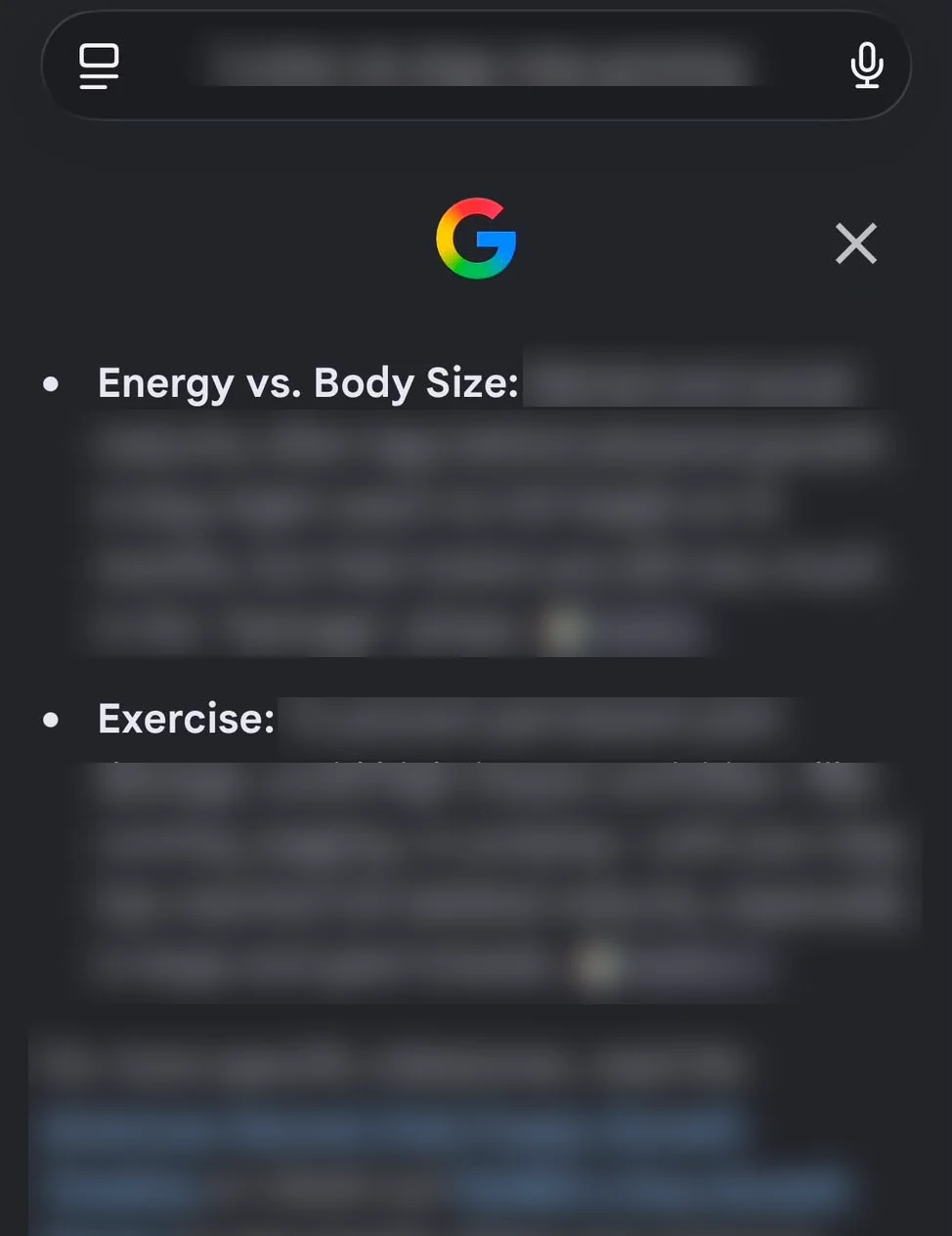
Google’s AI Overview now quotes this client directly on a common animal health question, using them twice in the same answer. Two national pet authorities are listed right underneath as further reading.
That was not an accident. We restructured the content to make it easy to pull. We put plain answers in the first two lines, used clear headings, and made sure the information was specific enough to quote. It aligns perfectly with what Google says about AI answers, which boils down to writing original, useful content. We even tested 100 AI Overviews beforehand to figure out exactly what earns a citation.
What This Comes Down To
Writing about the right things is only the first step. This business knew its audience well. They just hadn’t published enough to compete, and their live pages weren’t built to be found.
If you publish regularly but your traffic is flat, check three things before you write another post. First, do you have enough depth on a topic for Google to treat you as a source? Second, are your pages secretly competing against each other? Third, does your website reflect your current business or the version from three years ago?
Running a Pet Business That Deserves to Be Found?

Almost every version of this SEO client case study points to the same core issue, and it’s rarely about effort. If you’re publishing consistently but still not ranking for the searches that bring in bookings, fill out the form below to work with the team behind these results.
Ready to get more traffic? Fill out the form and we’ll be in touch asap!
Categories:
Explore more work
Wholesale SEO: How Moon Margery Got Found by New Buyers By Matt Diamante, Founder of HeyTony. #1 Amazon bestselling SEO…